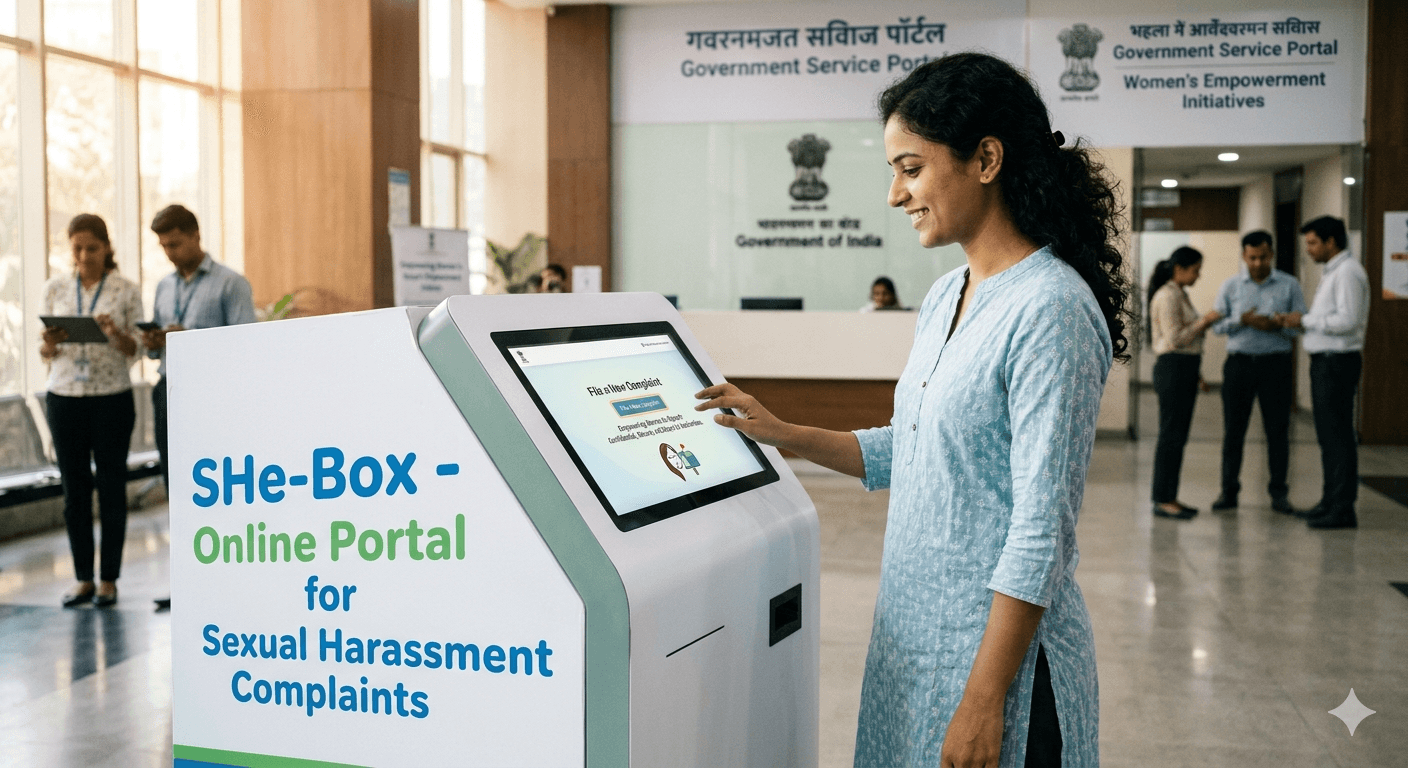
Maharashtra has significantly tightened workplace POSH enforcement. Through its circular dated 14 May 2026, the state government has formally authorized district officers and multiple Women & Child Development officials to inspect private companies, government bodies, corporations, and other establishments for compliance under the POSH Act 2013.
This marks a major shift in Maharashtra POSH compliance expectations.
The circular introduces a detailed 31-point inspection checklist covering Internal Committee (IC) formation, complaint handling timelines, employee awareness, confidentiality, annual reporting, SHe-Box onboarding, digital workplace coverage, and POSH training obligations. You can download the checklist prepared by XLPro here.
Companies should now assume that POSH inspections can happen at any stage. The important question is no longer: “Do we have a POSH policy?” The real question is: “Can we practically demonstrate compliance with Maharashtra POSH requirements if an inspection is carried out?”
1. Audit Your Internal Committee Immediately
Many organizations technically have an IC but fail basic legal requirements.
The Maharashtra POSH compliance checklist specifically checks whether:
- Every office or unit has an IC
- The IC has at least four members
- At least 50% of members are women
- A senior woman employee is appointed as Presiding Officer
- An external member is included under Section 4(2)(c) of the POSH Act
Start by reviewing:
- IC appointment letters
- Tenure validity
- External member documentation
- Training records
- Branch wise IC coverage
If the IC only exists on paper, it becomes a serious compliance risk during inspection.
2. Update Your POSH Policy for Hybrid and Digital Workplaces
The checklist now specifically asks whether the POSH policy includes remote and virtual work environments. Many companies still use outdated policies drafted before hybrid work became common.
Your policy should clearly address:
- Virtual harassment
- Video meeting misconduct
- Messaging platform abuse
- Work-from-home interactions
- Digital communication standards
With rise in hybrid workplaces, Maharashtra POSH compliance now extends beyond physical office spaces to extended workplaces and virtual environments.
3. Make POSH Awareness Visible Across the Organization
The circular places strong emphasis on awareness and accessibility.
Inspectors may verify whether:
- Employees received the POSH policy
- POSH notices are displayed prominently
- Reporting mechanisms are visible
- SHe-Box information is available on official channels
Practical action steps:
- Email the POSH policy to all employees
- Upload it on the HRMS or intranet
- Display IC details in office locations
- Add POSH reporting information to onboarding
- Include POSH guidance in employee handbooks
If employees do not know how to report concerns, compliance becomes weak.
4. Strengthen IC Capability Through POSH IC E-Learning
One of the biggest compliance gaps in Indian organizations is poorly trained IC members.
The inspection checklist specifically asks whether IC members have received complaint-handling training and whether regular awareness programs are conducted for employees.
Many IC members still lack practical understanding of:
- Inquiry timelines
- Principles of natural justice
- Evidence handling
- Confidentiality obligations
- Interim relief procedures
- Investigation documentation
- Report writing standards
This is where structured POSH IC e-learning becomes extremely valuable.
Instead of relying only on one-time workshops, organizations are increasingly adopting digital learning modules to standardize Internal Committee capability across locations and teams. XLPro’s POSH IC e-learning module is designed specifically for Internal Committee members and focuses on practical complaint handling, inquiry procedures, legal timelines, documentation standards, confidentiality obligations, and investigation readiness under the POSH Act.
5. Improve Employee Awareness Through POSH E-Learning
The Maharashtra inspection framework also places strong emphasis on employee awareness and sensitization.
Many organizations still conduct only basic annual awareness sessions that employees barely remember.
Scenario based POSH e-learning modules helps organizations to:
- Train employees consistently across locations
- Include hybrid and virtual workplace scenarios
- Standardize awareness messaging
- Maintain digital training records
- Improve reporting awareness
- Support onboarding programs
- Build workplace sensitivity at scale
XLPro’s POSH e-learning module for employees is designed to help organizations conduct structured awareness training aligned with the POSH Act while keeping the learning practical, workplace-oriented, and easy to understand for employees across functions.
As more organizations move toward inclusive workplace policies, there is also growing demand for gender-neutral workplace harassment awareness training. XLPro additionally offers an online POSH training module to address gender-neutral workplaces that helps organizations build broader workplace sensitivity and respectful conduct awareness beyond minimum statutory compliance requirements.
6. Review Complaint Handling Timelines
The Maharashtra POSH compliance inspection framework places significant focus on procedural compliance.
Inspectors may check whether:
- Complaints are acknowledged within seven working days
- Inquiries are completed within 90 days
- Employers act on IC recommendations within 60 days
Many organizations struggle here because documentation is inconsistent.
Maintain:
- Complaint registers
- Acknowledgment records
- Inquiry notices
- Witness records
- Closure reports
- Action taken documentation
If timelines are delayed, record the reasons clearly.
7. Strengthen Confidentiality Controls
The checklist repeatedly refers to confidentiality obligations under Section 16.
Companies should immediately review:
- Who can access complaint records
- How investigation files are stored
- Whether email access is restricted
- Whether managers casually discuss complaints
- Whether sensitive data is securely archived
Weak confidentiality practices can create serious compliance exposure during inspection.
8. Complete SHe-Box Compliance
One of the biggest shifts in the Maharashtra POSH compliance framework is the strong focus on SHe-Box onboarding.
Inspectors may verify whether organizations have:
- Appointed a SHe-Box nodal officer
- Uploaded IC details
- Updated branch office information
- Uploaded annual reports
Many companies still have incomplete SHe-Box implementation. That should now become an immediate compliance priority.
9. Conduct an Internal POSH Compliance Review
The smartest companies will not wait for an inspection notice.
Conduct an internal audit using the same Maharashtra checklist.
Review:
- IC constitution
- POSH e-learning completion records
- Employee awareness sessions
- Annual reports
- Documentation systems
- Complaint handling processes
- SHe-Box onboarding
- Investigation protocols
Organizations that proactively improve Maharashtra POSH compliance will be far better prepared if inspections occur.
Final Thoughts
Maharashtra’s new inspection drive signals a major shift from passive compliance to active enforcement. Organizations that rely on outdated policies, inactive ICs, or outdated methods to train employees and ICs on POSH awareness may now face greater regulatory scrutiny.
The companies that will remain safest are the ones that operationalize compliance across:
- Policy
- IC capability
- Documentation
- Investigations
- Reporting
- Awareness through online training modules on POSH for ICs and enterprise wide POSH e-learning module
- Leadership accountability
In 2026, Maharashtra POSH compliance is no longer just about having a policy document.
It is about proving that the system actually works.