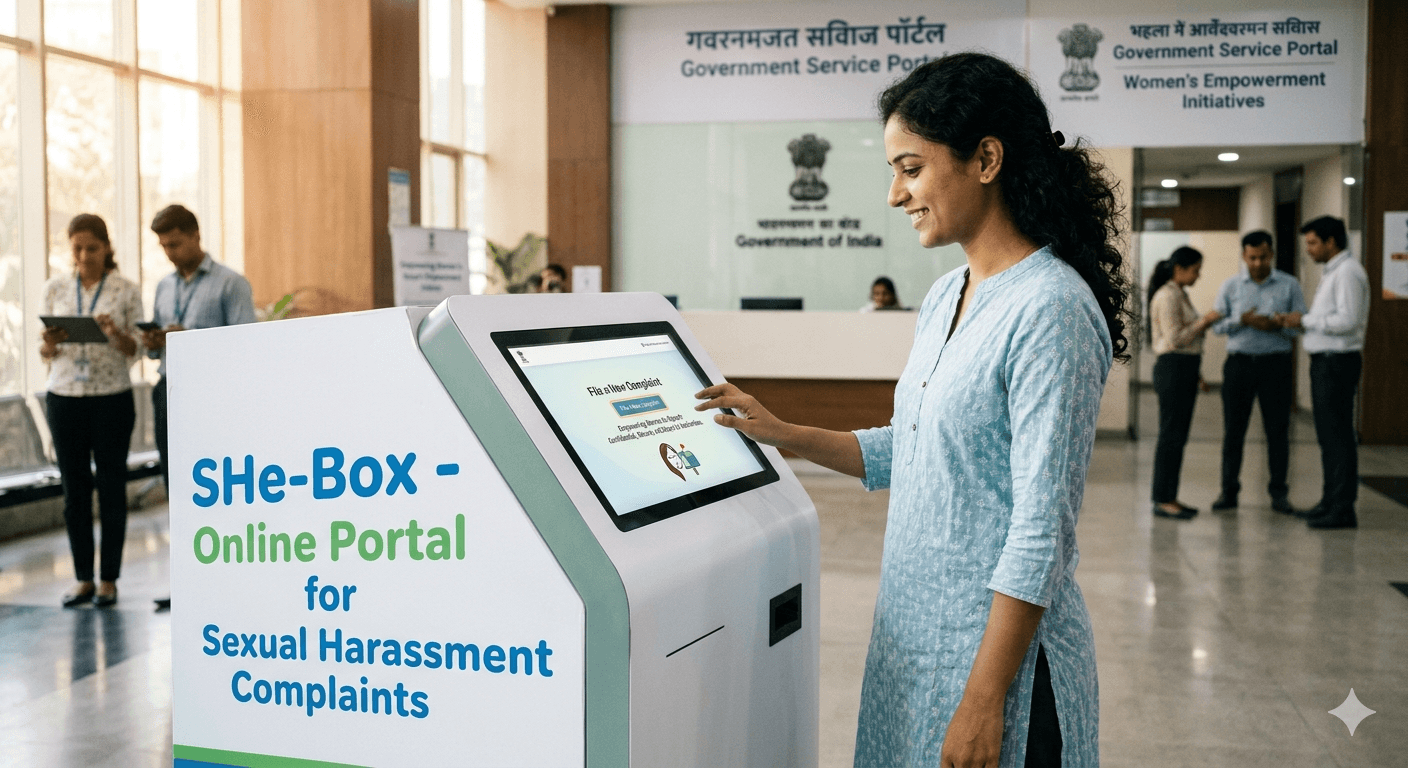
With the January 31, POSH compliance and reporting cycle approaching, organizations need to look beyond simply having a POSH policy and an Internal Committee in place. The POSH Act places an obligation on employers to conduct regular awareness programmes for employees, while the growing awareness of SHE-Box as a mechanism for reporting workplace sexual harassment has made it even more important for employees to understand their rights and the complaint process.
For smaller organizations, this raises a practical question: should employee awareness be delivered through live virtual training or POSH e-learning? Both approaches have their place. But for a smaller organization with a lean HR team, the difference between the two can be quite significant.
What Is POSH VILT or POSH Online Training?
POSH VILT, commonly referred to as POSH online training is essentially live training delivered online.
Employees join a scheduled session of around two-four hours through a platform such as Zoom or Microsoft Teams, and a trainer takes them through the subject. The trainer can explain the provisions of the POSH Act, discuss workplace situations and answer questions as they come up. It is certainly more convenient than asking employees to travel to a training venue.
But there is one thing VILT does not eliminate:
The need for everyone to be available at the same time.
And that can still be a challenge.
A small organization may have employees spread across locations, people travelling for work and teams with very different schedules. Finding a two-hour slot that works for everyone is not always easy.
POSH E-Learning Takes a Different Approach
With e-learning, there is no common training slot.
The organization assigns the self paced e-learning course and gives employees a deadline to complete it. Employees can log in and complete the training at a suitable time.
A good POSH e-learning course can include explanations, workplace scenarios, interactions, questions and an assessment. This does not mean employees simply read through a presentation online. The course should actually make them think about situations they may encounter at work.
For a small organization, the flexibility can be a major advantage.
The Scheduling Problem Goes Away
Consider a company with 60 employees.
With VILT, HR has to find a time when those 60 employees can attend a live session. Even if the majority can make it, there will probably be a few exceptions.
Now HR has to follow up on aspects like
- Who missed the training?
- When can they attend?
- Does the trainer need to conduct another session?
With e-learning, the organization can give everyone a completion window instead.
For an HR team that is already handling recruitment, onboarding, employee queries and several other responsibilities, removing this scheduling exercise can make life considerably easier.
VILT Gives You a Trainer, E-Learning Gives You Flexibility
This is probably the simplest way to look at the difference.
VILT has a live trainer at the center of the session.
Employees can ask questions, discuss situations and hear how other people interpret a particular scenario. That interaction can be very useful, especially when the organization wants a discussion rather than just awareness.
E-learning gives employees more control over how they complete the training. They can pause the course, revisit a section or go through a scenario again. They also do not have to ask a sensitive question in front of their colleagues.
For POSH training, that can be important.
Does VILT Automatically Mean Better Engagement?
Not necessarily.
A live session can be engaging, but it can also turn into a long presentation if the trainer spends most of the time talking and employees spend most of the time listening.
The same applies to e-learning. An online course packed with text and policy language is unlikely to hold anyone’s attention simply because it is online.
What matters is how the training is designed.
POSH training works particularly well when employees are given situations they can recognize like:
- What should you do if a colleague makes an inappropriate comment?
- What if you receive an uncomfortable message from someone at work?
- What should you do if you witness inappropriate behaviour?
- What happens after someone makes a complaint?
These are the questions employees are more likely to remember than pages of legal terminology.
Completion and Assessment are Easier to Manage with E-Learning
This is another practical difference for a smaller HR team.
With VILT, attendance is usually straightforward to record, but the assessment often sits outside the training itself. For example, employees may receive a Google Form or Google Sheet based assessment after the live session. HR then has to collate the responses, check scores and maintain the records separately from the training attendance.
E-learning brings the learning, assessment and completion record together.
The employee completes the course, takes the assessment within the course and receives a completion status based on the defined requirements. The LMS can maintain the learner’s course completion and assessment record in one place.
That makes a difference when HR needs to answer simple questions such as:
- Who completed the training?
- Who passed the assessment?
- Who still needs to complete it?
With e-learning, these details can be available through the learning platform rather than sitting across attendance lists, emails and separate assessment files.
For a smaller organization with limited HR resources, having the training, assessment and completion records together can make POSH compliance much easier to administer.
Evaluating POSH VILT vs E-Learning
There is another practical difference that often gets overlooked when organizations are choosing between VILT and e-learning: how easy it is to evaluate the training before making the decision.
With POSH e-learning, the buyer can usually see the actual course before purchasing it. The content, scenarios, interactions, assessments, narration and overall learning experience are all there to review. You can look at the complete course and assess whether the content is relevant, whether the examples feel realistic, whether the language works for your employees and whether the assessment actually tests understanding. In short POSH e-learning puts much more of the learning experience in front of the buyer.
With VILT, the evaluation is different. You may review the trainer’s profile, the proposed agenda and the topics that will be covered, but the actual experience happens during the live session. The way the trainer explains the subject, handles questions and engages employees becomes a major part of the training.
This does not make VILT difficult to evaluate, but it does make the evaluation less tangible.
For a smaller organization that may not have a dedicated learning and development team, this can make the buying decision much simpler. Instead of choosing a trainer based mainly on a proposal and profile, the organization can actually experience the course before deciding.
What About New Employees?
This is one of the biggest practical advantages of POSH e-learning.
Suppose an organization conducts its annual POSH awareness session in January. Three months later, five new employees join. With VILT, the organization may need to wait for another session or arrange a separate session for the new employees.
With XLPro’s concise POSH e-learning course of about 15 minutes, HR can simply assign the course to them. This makes it much easier to include POSH awareness in the onboarding process.
For smaller organizations that continue hiring throughout the year, this flexibility can save both time and effort.
What About the Cost?
Cost is naturally an important consideration for smaller companies.
VILT removes the expense and logistics of a physical venue, but there is still the cost of the trainer’s time. There is also the time employees spend attending the live session.
If employees miss the session, the organization may have to arrange another one.
E-learning can reduce some of this logistical burden. Depending on the licensing arrangement, the same course can be assigned to the organization’s employees without arranging a separate live training session every time.
For a smaller team, that can make e-learning a practical option rather than an enterprise-only solution.
For example, XLPro’s POSH e-learning courses can be taken up by organizations starting with around 10 employees. That makes it relevant not only to large companies but also to smaller businesses that want a structured way to conduct employee awareness training.
Why Stop at the Annual Training?
This is where online learning has another advantage.
POSH awareness does not have to end when an employee finishes the annual course.
People forget. A concept that seemed obvious in January may not be at the front of someone’s mind six months later.
Short reinforcement content can help keep important messages fresh.
XLPro’s POSH videos can be used for this purpose and delivered to employees through WhatsApp. Instead of asking employees to complete another lengthy course, organizations can share short videos covering specific aspects of workplace conduct and POSH awareness.
One video could focus on recognizing inappropriate behaviour. Another could address what to do when someone approaches you with a concern. Another could reinforce the importance of confidentiality.
These small reminders take very little time but keep the subject visible throughout the year.
VILT and E-Learning Can Work Together
It does not have to be a case of VILT versus e-learning.
An organization can use each where it makes the most sense.
For example: Employee awareness: POSH e-learning and Ongoing reinforcement: Short POSH videos through WhatsApp
This gives the organization a structured annual learning program while keeping POSH awareness alive beyond one training session.
So, What Makes Sense for a Smaller Organization?
There is no single answer for every organization.
If you want employees to interact with a trainer, ask questions and discuss situations together, VILT can work very well.
If you want to train employees across different locations and schedules, track completion easily and avoid repeatedly coordinating live sessions, e-learning can be much easier to manage.
For smaller organizations, that difference matters.
A lean HR team may not have the time to keep scheduling sessions and chasing employees for attendance. Employees may not have the flexibility to block the same time for a live training session.
E-learning removes much of that friction.
And it can start small. An organization does not need hundreds of employees to make digital POSH training worthwhile.
POSH Training Should be More Than a Compliance Exercise
At the end of the day, the objective is not to conduct a VILT session or make employees complete an e-learning course.
The objective is awareness.
Employees should understand what sexual harassment means. They should know how to raise a concern and understand the organization’s complaint mechanism. They should know the role of the Internal Committee and their own responsibility in maintaining a respectful workplace.
VILT and e-learning can both help achieve that.
But for smaller organizations looking for a flexible, consistent and easier-to-manage way to train employees, e-learning offers some clear practical advantages.
And when short videos and other reinforcement activities continue the conversation throughout the year, POSH training becomes more than an annual event.
It becomes part of the way the organization builds awareness and maintains a respectful workplace.