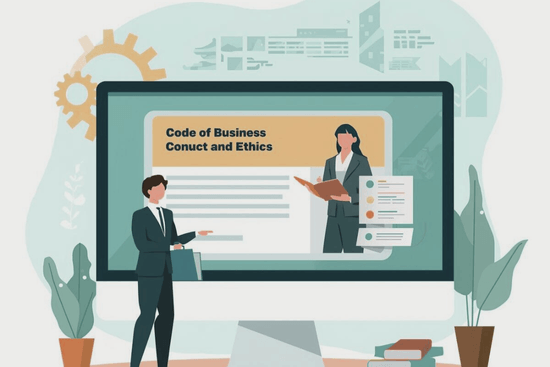
Launching a Code of Conduct and Ethics e-learning course isn’t just about compliance.
Done right, it’s about shaping behavior, building culture, and protecting reputation—especially in a diverse, fast-evolving business landscape like India.
But to move beyond a “tick-the-box” exercise, companies must approach e-learning strategically.
Here’s a proven framework: Assess, Engage, Reinforce.
1. Assess: Understand Your Organization’s Needs and Gaps
Before designing or deploying a Code of Conduct course, ask:
-
Where are the biggest risks? (e.g., conflicts of interest, bribery, harassment, insider trading)
-
What do employees already know—and what are they unclear about?
-
Are there cultural, language, or regional nuances to consider?
-
Are certain teams (sales, procurement, finance) more exposed to ethical dilemmas?
How to assess effectively:
-
Conduct surveys or focus groups
-
Analyze past compliance breaches or audit reports
-
Consult frontline managers for real-world ethical challenges
-
Review legal and regulatory obligations (like SEBI, MCA, and Companies Act requirements)
A proper needs assessment ensures your training is relevant, not generic.
2. Engage: Make the Learning Experience Practical and Interactive
Engagement is critical.
Employees won’t absorb or apply what they don’t connect with.
Ways to engage learners:
-
Use practical scenarios: Real-world ethical dilemmas employees might face
-
Make it India-specific: Include local examples, laws, and cultural contexts
-
Create bite-sized modules: Break the Code into digestible 5–10 minute lessons
-
Incorporate multimedia: Videos, quizzes, infographics, decision-tree activities
-
Allow for flexible access: Mobile-friendly platforms for on-the-go learning
-
Gamify the experience: Add points, badges, or leaderboards to encourage participation
When employees see how the Code of Conduct relates to their daily work, it transforms from a rulebook into a guidebook.
3. Reinforce: Build Ethics as an Ongoing Habit
A one-time e-learning course isn’t enough.
Compliance and ethical behavior need continuous reinforcement.
Strategies for reinforcement:
-
Periodic microlearning: Monthly ethical challenges or short video refreshers
-
Ethics newsletters: Share real stories of ethical decision-making inside or outside the organization
-
Manager-led discussions: Embed Code of Conduct topics into regular team meetings
-
Annual refresher modules: Update content as regulations and company policies evolve
-
Recognition programs: Acknowledge employees who demonstrate ethical leadership
Reinforcement moves ethics from the training room into everyday decisions.
Common Mistakes to Avoid
-
Overloading learners with too much legal jargon
-
Ignoring cultural relevance—leading to disengagement
-
Focusing only on completion rates, not actual understanding
-
Making it a checkbox activity instead of a meaningful development opportunity
A well-planned rollout = Higher impact + Lower risk.
An effective Code of Conduct e-learning course doesn’t just teach employees what rules to follow.
It builds a stronger, more ethical organization—where doing the right thing becomes second nature.
By assessing needs, engaging employees, and reinforcing learning, Indian companies can protect their brand, boost trust, and create workplaces people are proud to be part of.
Looking to design or enhance your Code of Conduct e-learning program?
Our customizable e-learning solution is built for the real-world needs of Indian businesses—making ethics practical, relatable, and sustainable.
continue reading
Related Posts

Banks invest heavily in technology, cybersecurity and compliance systems. Yet...